In food processing, marine and washdown environments, a standard alloy worm gearbox often does not last. Constant exposure to moisture, salt, cleaning chemicals and high-pressure washdown breaks down alloy housings over time, leading to corrosion, premature wear and unplanned downtime.
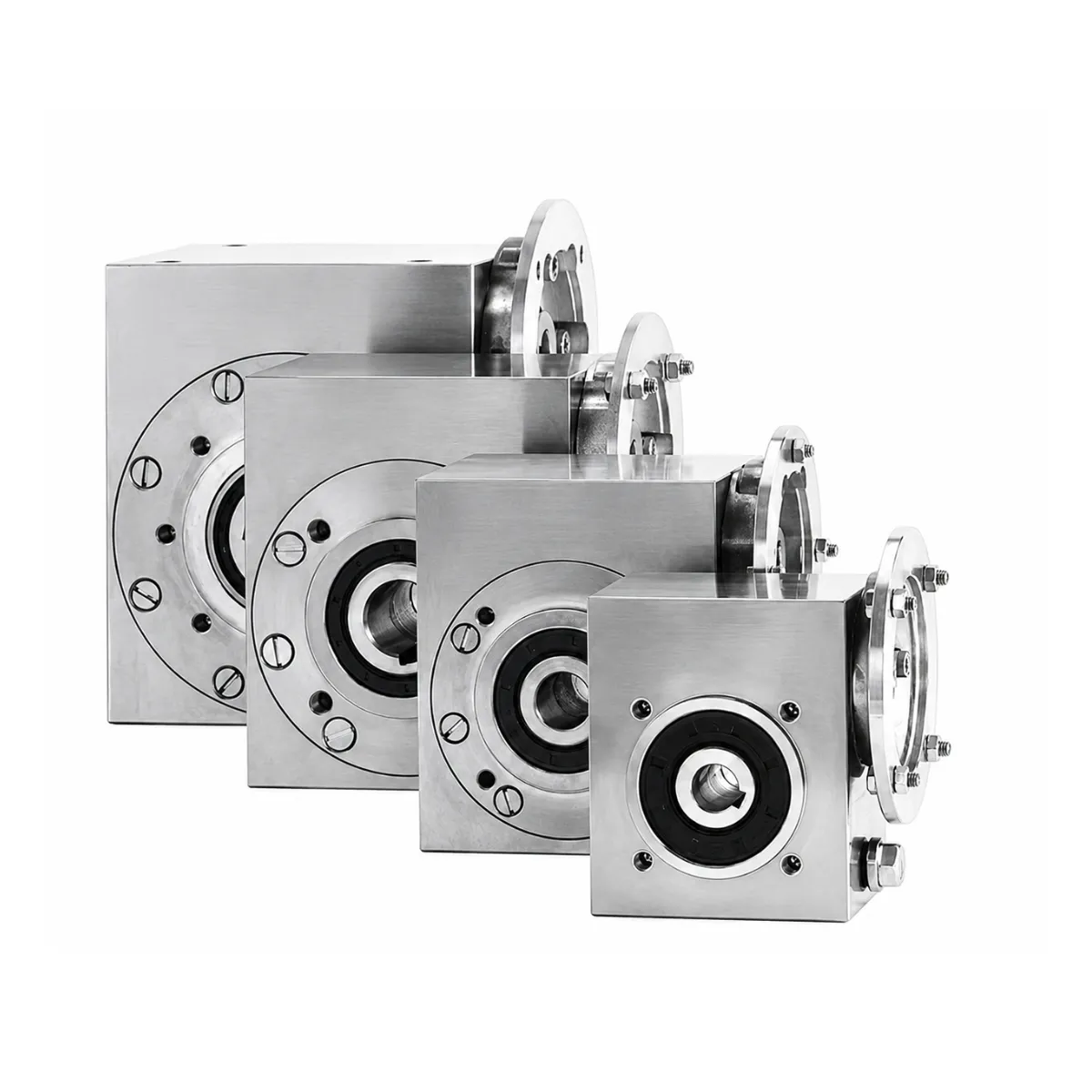
A stainless steel worm gearbox is built to handle exactly these conditions. It uses the same compact, high-torque worm drive design as a standard gearbox, but with a corrosion-resistant stainless steel housing that stands up to aggressive cleaning and wet operating environments.
This guide explains when stainless steel is the right choice, where it is typically used, and what details to confirm before ordering.
When Should You Choose Stainless Steel Over Alloy?
| Criteria | Alloy gearbox | Stainless steel gearbox |
|---|---|---|
| Housing material | Aluminium alloy | Corrosion-resistant stainless steel |
| Washdown and cleaning | Degrades under frequent high-pressure washdown | Built for repeated washdown cycles |
| Chemical and salt exposure | Corrodes with detergents, sanitisers and salt air | Resists detergents, sanitisers and saltwater |
| Typical environments | Dry, general industrial machinery | Food and beverage, marine, wastewater, pharmaceutical |
| Service life in wet duty | Shortened, with repeat replacement common | Extended, with fewer replacements |
| Drive design | Compact right-angle worm drive | Same compact right-angle worm drive |
Standard alloy gearboxes are perfectly suitable for dry, general industrial machinery. The problem starts when the operating environment becomes harsh.
Consider a stainless steel worm gearbox when your equipment is exposed to:
- Frequent washdown or high-pressure cleaning cycles
- Aggressive detergents, sanitisers or processing chemicals
- Saltwater, coastal air or marine conditions
- Hygiene-critical food and beverage production areas
In these settings, the corrosion resistance of stainless steel can dramatically extend service life and reduce the cost of repeated gearbox replacement. If you are already replacing alloy gearboxes more often than you would like, that is usually a sign the environment warrants a stainless steel unit.
Where Are Stainless Steel Worm Gearboxes Used?
Stainless steel worm gearboxes are most often specified for:
- Food and beverage manufacturing lines that are washed down regularly
- Marine equipment and deck machinery exposed to saltwater
- Wastewater and chemical processing plants
- Pharmaceutical and hygiene-critical processing areas
- Outdoor and coastal industrial machinery
The common thread is moisture, salt or chemical exposure that would shorten the working life of an unprotected alloy housing.
Why Does Hygiene Matter for Food-Grade Gearboxes?
In food and beverage production, the gearbox is not just a mechanical component — it is part of a hygienic system. The smooth, corrosion-resistant surface of a stainless steel gearbox supports cleaner washdown procedures, with no exposed dead spaces where contaminants can build up.
That makes stainless steel a practical choice for facilities working to maintain strict hygiene standards, where a corroding alloy housing could become both a maintenance and a compliance problem.
What Should You Specify Before Ordering?
Every application differs in mounting, ratio, torque and duty cycle, so the right configuration should be confirmed before ordering. When you get in touch, it helps to provide:
- The operating environment, including washdown frequency and chemical exposure
- Required output speed and torque
- Mounting position and shaft configuration
- Existing nameplate details or photos if you are replacing a unit
- Duty cycle and service factor requirements
Talk to Motordrives Australia
If you are replacing a corroded alloy gearbox or specifying a new drive for a washdown environment, our team can help confirm a suitable configuration. You can see the range and request details on our stainless steel gearboxes product page, or send through your application details and we will help recommend the right unit for your equipment.